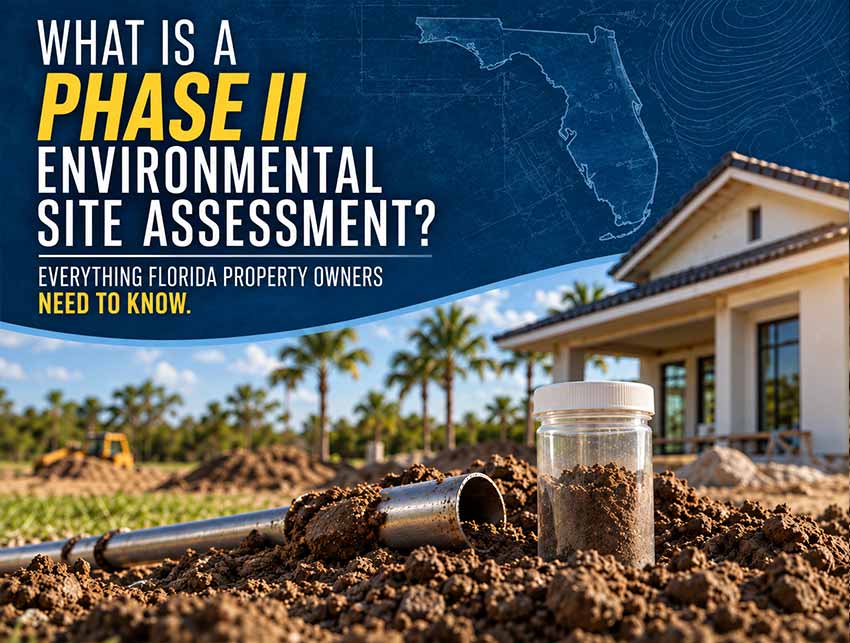
What Is a Phase II Environmental Site Assessment? Everything Florida Property Owners Need to Know
Buying land or a commercial property is a big step. A Phase II Environmental Site Assessment helps you find out if the soil or groundwater has contamination before you move forward. If a Phase I Environmental Site Assessment shows possible environmental concerns, a Phase II study helps confirm whether contamination is present. This information can help property owners, developers, lenders, and investors make better decisions before construction or property purchases.
Whether a new project is planned or an existing property in Florida is purchased, time, money, and future problems can be saved by understanding how this process works.
What Is a Phase II Environmental Site Assessment?
A Phase II Environmental Site Assessment is an environmental investigation that includes gathering soil, groundwater, soil vapor, or other samples from the property. Samples are analyzed in accredited laboratories for contaminants.
The goal is easy. Confirms whether or not environmental contamination is present after concerns have been established through the Phase I Environmental Site Assessment.
Commonly found as contaminants:
-
Industrial chemicals
-
Heavy metals
-
Petroleum products
-
Solvents
-
Pesticides
-
Volatile organic compounds
Why Florida Property Owners May Need a Phase II Environmental Site Assessment
Phase II testing is not required for every property. It is usually initiated when signs of possible contamination are identified in a Phase I report.
Examples include:
-
Old gas stations
-
Auto repair shops
-
Manufacturing facilities
-
Dry cleaners
-
Agricultural properties
-
Warehouses with chemical storage
How a Phase II Environmental Site Assessment Is Performed
These steps are usually followed during the process:
-
Review the Phase I findings.
-
Develop a sampling plan.
-
Drill soil borings or install monitoring wells.
-
Collect soil and groundwater samples.
-
Send samples to a certified laboratory.
-
Review laboratory results.
-
Prepare a detailed engineering report.
The final report explains whether contamination exists and whether additional testing or cleanup may be recommended.
What Happens After Testing?
If laboratory results show no contamination above regulatory limits, the property transaction may continue with greater confidence.
If contamination is found, the next steps may include:
-
Additional environmental investigations
-
Risk evaluation
-
Cleanup planning
-
Coordination with environmental agencies
Each property is different, so recommendations depend on site conditions and test results.
Why Choose LB Engineering?
LB Engineering has a reputation for providing engineering services and building long-term relationships with clients. In fact, more than 90% of their projects come from repeat clients. This shows the trust that property owners, contractors, architects and developers have in the team.
With the addition of RR Engineering, LB Engineering now provides expanded geotechnical engineering services, including ground vibration monitoring and deep foundation installation monitoring.
Our team works closely with clients throughout every stage of a project to help support informed decisions while meeting engineering and regulatory requirements.
Explore our engineering solutions.
Talk with the LB Engineering crew today to speak about your mission and agenda an environmental assessment.
FAQs
What is the difference between Phase I and Phase II Environmental Site Assessments?
A Phase I ESA reviews historical records and includes a site inspection. A Phase II Environmental Site Assessment consists of sampling and laboratory trying out to confirm whether contamination exists.
Who usually requests a Phase II Environmental Site Assessment?
Property buyers, lenders, developers, investors, municipalities and commercial property owners commonly request one before purchasing or developing land
Is Phase II testing required for every property purchase?
No it is generally recommended when a Phase I Environmental Site Assessment finds recognized environmental concerns that need further investigation.