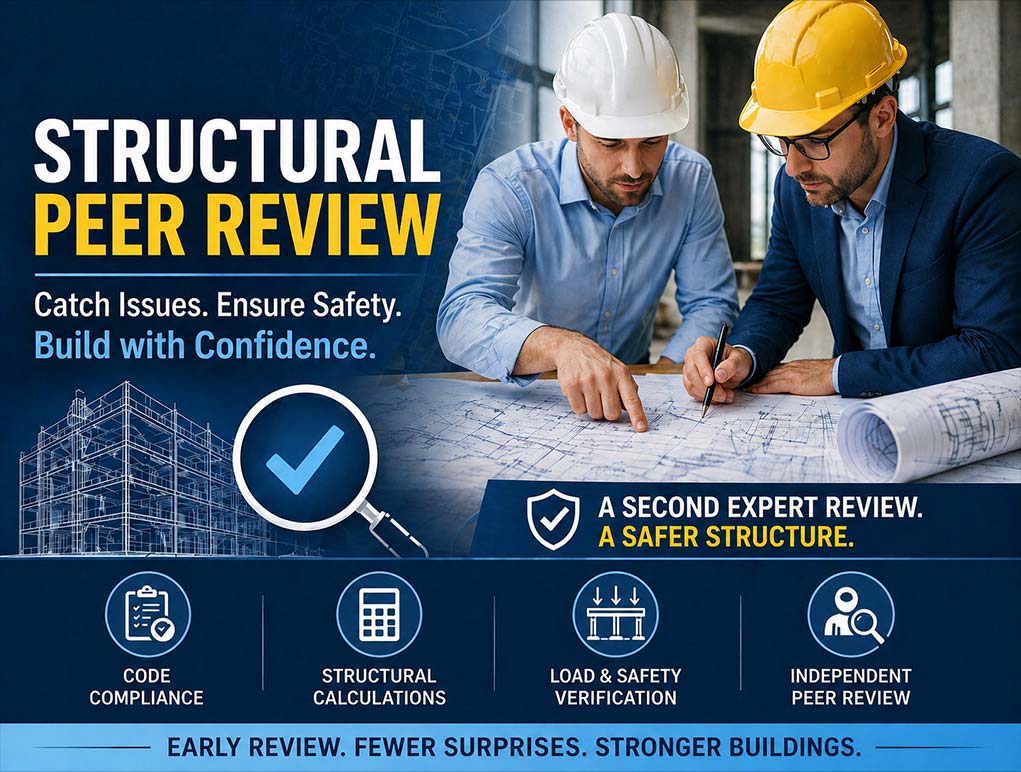
Structural Engineering Peer Review: Why It Matters
When a building design is ready, one final expert check makes all the difference: Structural engineering peer review is that extra review step. A second qualified engineer checks the structural plans before construction starts.
This step helps catch mistakes early. It also confirms the design meets building codes and safety rules. For large or complex buildings, cities and developers often request this review.
At LB Engineering, engineers work with architects and contractors to check designs carefully. The goal is simple: safe structures and smooth construction.
Why Structural Engineering Peer Review Matters
A structural engineering peer review gives a fresh look at the design. Even experienced engineers can miss small issues during busy projects.
A peer reviewer checks items like:
-
Structural calculations
-
Foundation design
-
Load assumptions
-
Code compliance
-
Safety factors
If something looks wrong, it gets corrected before construction starts. Fixing a design on paper is much easier than fixing it on a job site.
This step also builds trust between developers, engineers, and local authorities.
How the Structural Engineering Peer Review Process Works
The structural engineering peer review process is simple but detailed.
Independent Engineer Review
A licensed engineer who was not involved in the original design studies the project documents. This includes:
-
Structural drawings
-
Engineering calculations
-
Soil reports
-
Design assumptions
The reviewer verifies if the structure can withstand loads like wind, weight, and seismic forces.
Sometimes comments or recommendations are added. The design engineer then updates the plans if needed.
This process helps keep projects safe and compliant with local codes.
Projects That Often Require Peer Reviews
Not every project needs this review. But many large or complex structures do.
Examples include:
-
High-rise buildings
-
Hospitals and public facilities
-
Bridges and infrastructure
-
Buildings in hurricane or seismic zones
Developers often request peer reviews for risk reduction. Many cities also require it before approving permits.
If you are planning construction, you can explore available engineering services.
Why Builders Choose LB Engineering
LB Engineering works with architects, developers, and contractors through every stage of design and construction.
More than 90% of projects come from repeat clients, which shows long-term trust in the engineering team.
The company also expanded its expertise when RR Engineering joined LB Engineer. This partnership added experience in:
-
Geotechnical engineering
-
Ground vibration monitoring
-
Deep foundation monitoring
Safer buildings and better construction planning are supported by the teams working together.
If you want to learn more about the company and its work, visit the homepage.
Talk With Our Engineering Team
If you need a review for a building design, the LB Engineering team is ready to help.
Want to talk with an engineer about your project? Send us a message through our contact page.
FAQ: Structural Engineering Peer Review
What is structural engineering peer review?
It is when an independent engineer reviews structural design plans to confirm safety, calculations, and code compliance before construction begins.
When is a peer review required?
Many cities require it for complex buildings, tall structures, hospitals, and projects in high-risk areas like hurricane zones.
Who performs the review?
A licensed structural engineer who was not involved in the original design performs the review.
Does peer review delay construction?
No. It usually helps projects move faster because issues are corrected before construction begins.